


A journey through time, memory and meaning
In In the visual narrative The Legend of the Golden Mouse, a small witness journeys
through seven ages of time.
She moves silently among objects, ideas, and worlds that once seemed
self-evident—and no longer do.
The mouse does not tell history.
She weaves it together.
What you see is not an illustration of the past, but a contemporary reflection on time,
memory, and meaning.
Ferdinand de Groot — Travelling Through Time
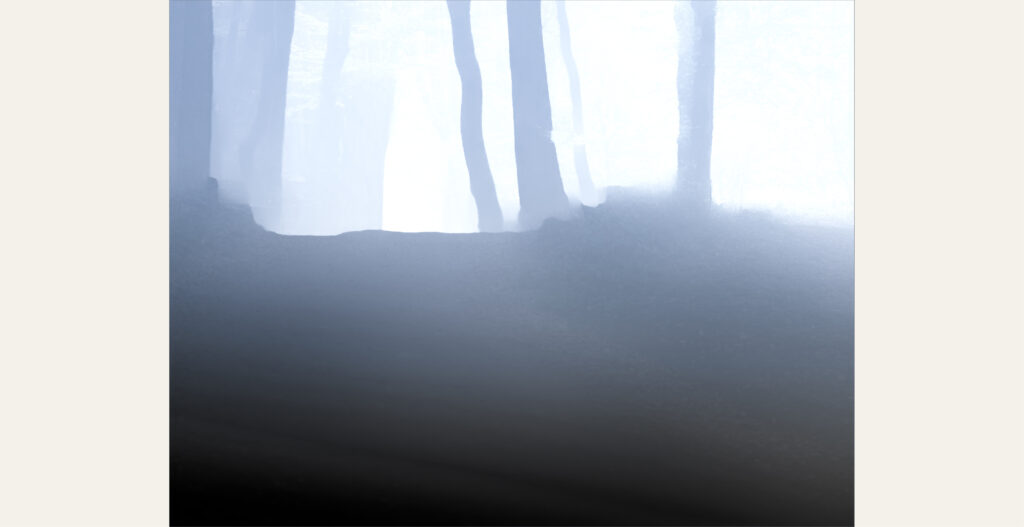
The Origin — The First Intimation
Before the journey began,
there was silence.
No direction.
No words.
No memory.
Only mist and light—and something that had not yet been named..
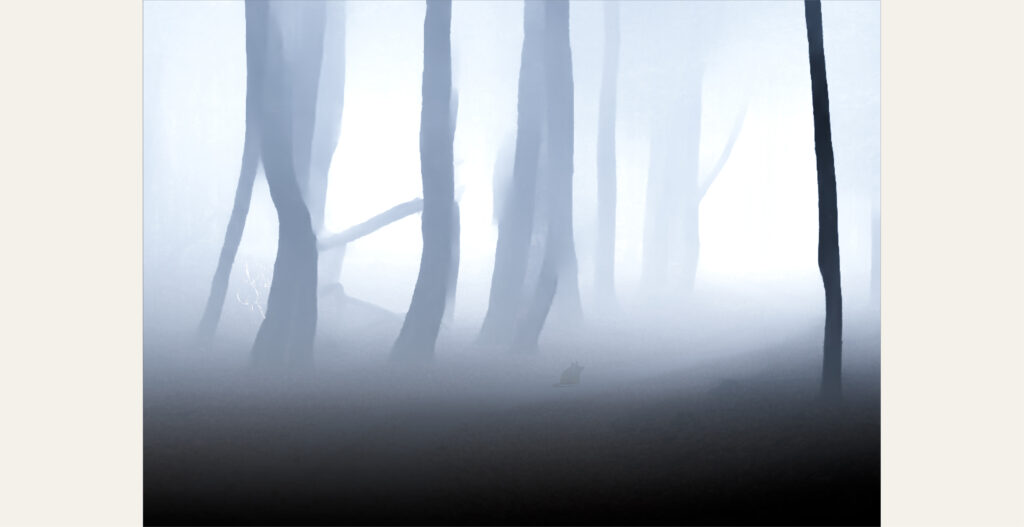
Antiquity — Where Light Emerges
At the beginning of her journey, the mouse encountered a sign.
Without a single word, it showed her a way:
Good Thoughts.
Good Words.
Good Deeds.
She did not yet understand it completely, but she continued on her way.
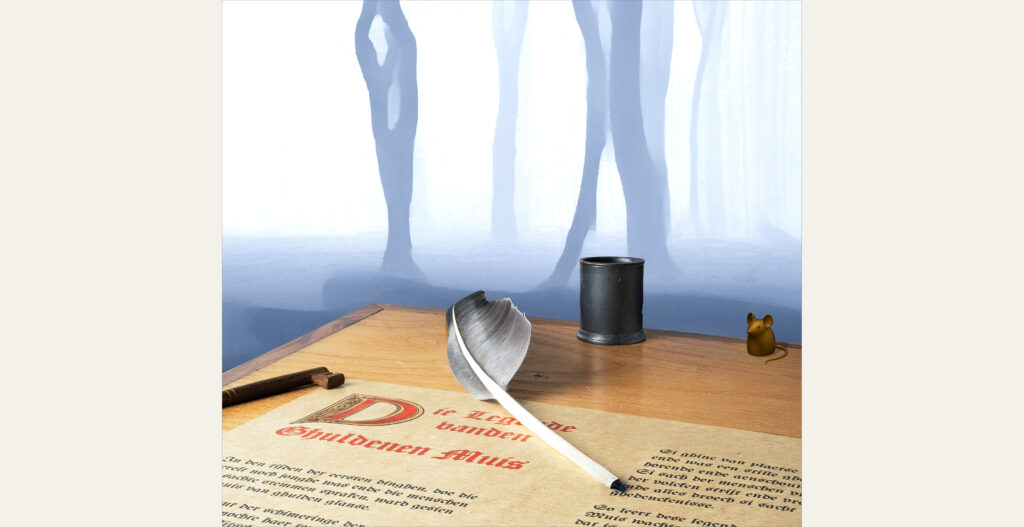
The Middle Ages — The Written Word
The world began to change.
Stories were written down.
Names acquired meaning, and people searched for truth.
While monks gathered words and preserved stories, the mouse discovered something remarkable:
her own legend had always existed.
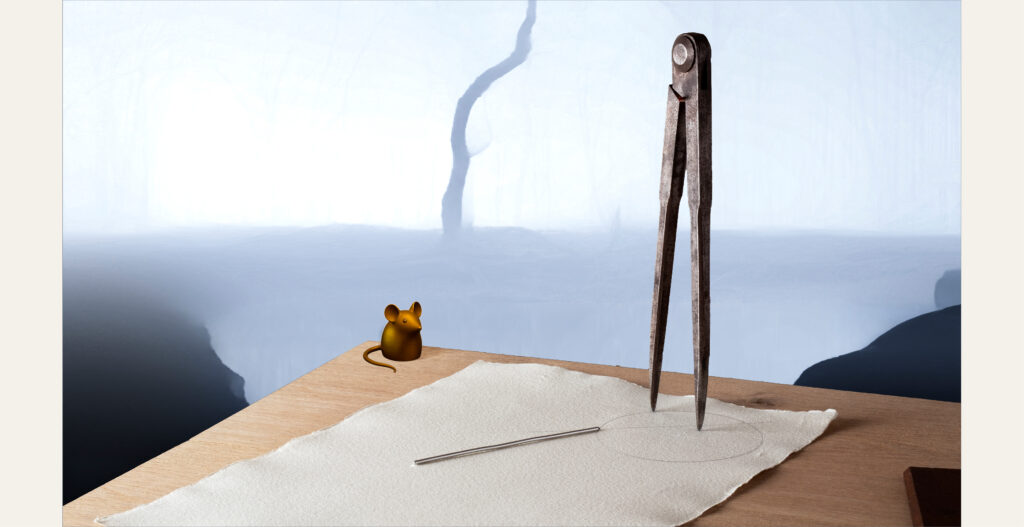
The Renaissance — Measuring The World
People began to measure, to draw, and to bring order to the world.
Lines became circles.
Ideas took shape.
The mouse watched, and saw how understanding became a language of its own.
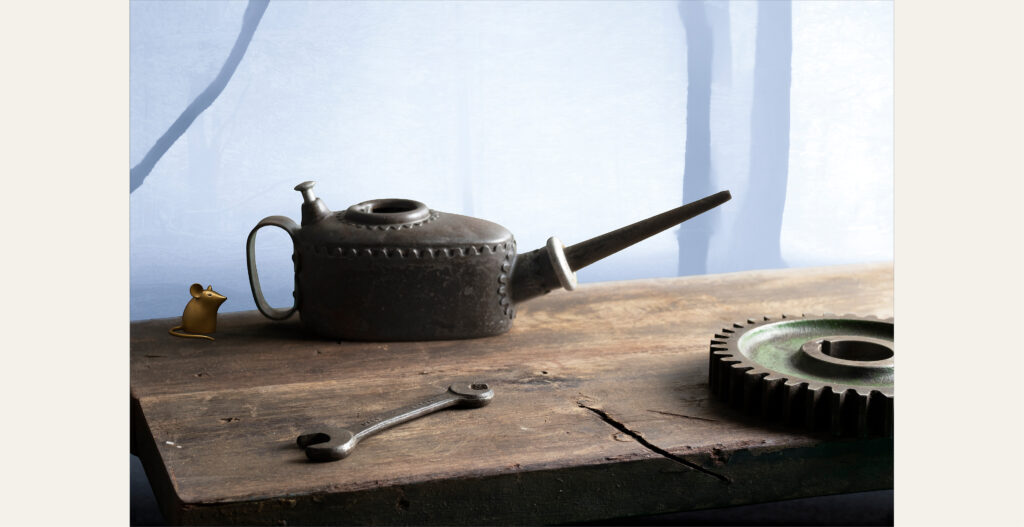
The Industrial Revolution — Setting The World In Motion
The silence of paper and ink gave way to iron and movement.
Wheels began to turn.
Machines awakened.
The world gathered speed.
The mouse simply watched.
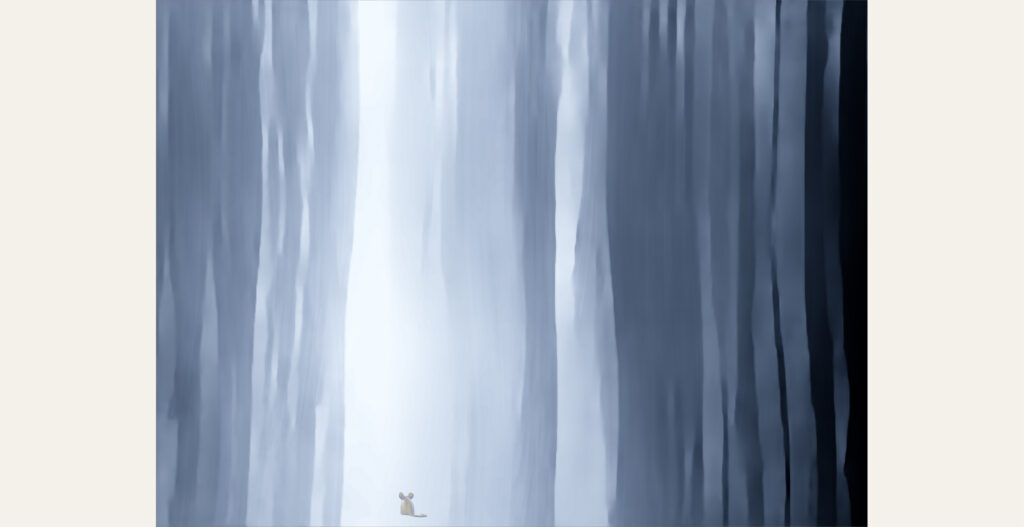
The Artificial Age — When Form Begins To Fade
Light appeared without flame.
Voices could be heard without bodies.
What had once been created by human hands now emerged from data and patterns.
The mouse did not ask
where the road would lead.
She simply followed her own path.

Where Time Has No Name — What Remains
At last, she arrived at a place where direction no longer existed.
No past.
No future.
Only a path
leading beyond the reach of sight